
One day it could be you.
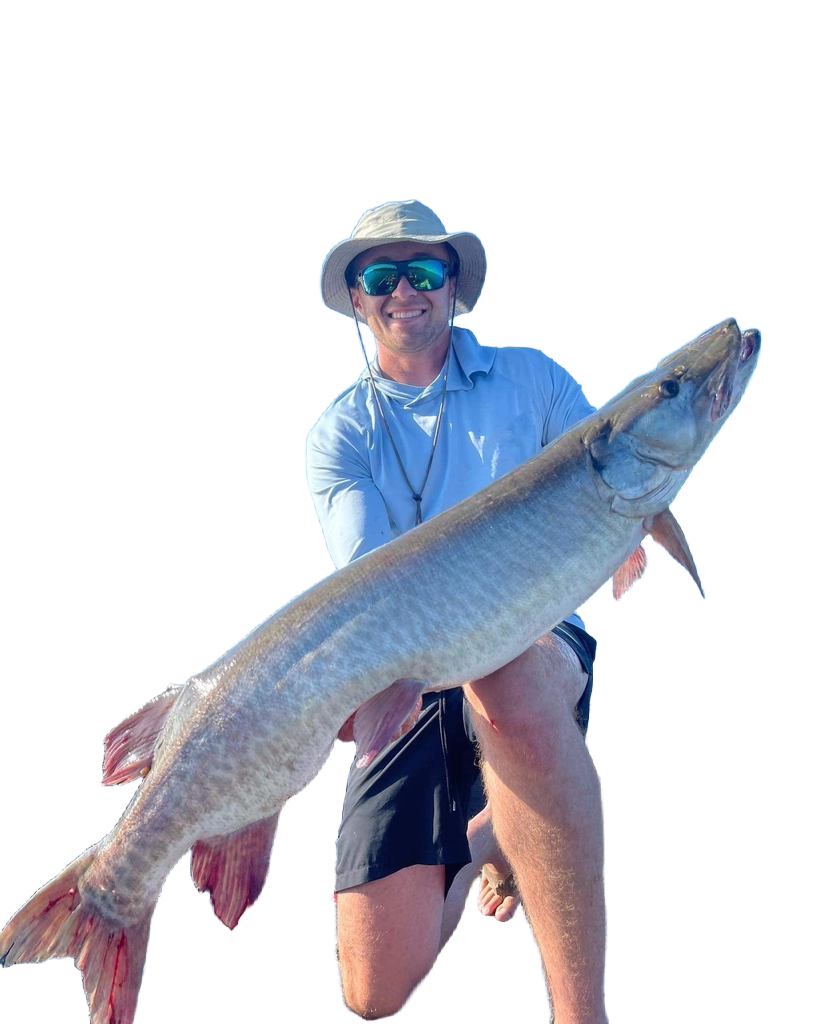
Holding a 50-Inch Trophy Musky.
On the Front Page.
On the Lodge Website.
On a Fishing Show Highlight Reel.
Let me guess.
You’ve imagined it.
That perfect shot.
Sun low on the water.
Your hands wrapped around the thick, spotted flank of a giant.
Your buddy behind the camera saying, “Don’t move… this is the one.”
Maybe you’ve seen those photos online.
Big fish.
Big smiles.
Big memories.
And you thought…
“What would it take for that to be me?”

I’ve thought the same thing.
Because musky fishing isn’t just about catching fish.
It’s about chasing a moment.
A moment that lasts forever.


It’s Not About Numbers. It’s About That One Fish.
They call it the fish of 10,000 casts for a reason.
You can grind all day.
No follows.
No strikes.
Just wind and water.
And then…
Everything changes in three seconds.
A shadow behind your bait.
A flash at boatside.
Your heart in your throat.
That’s the moment you’re fishing for.
Not a dozen fish.
One.
One that makes your hands shake.
One that earns a photo your grandkids will ask about someday.
The Dream Isn’t Silly. It’s Earned.
Some guys say, “I don’t care about size.”
But deep down?
Most of us do.
Not for ego.
For legacy.
For that photo framed in the cabin.
For the picture your buddies send around every fall.
For the lodge owner who says, “Mind if we feature this on our site?”
You don’t remember the average fish.
You remember the giant.
You remember the day.
You remember the feeling.
That Photo Means Something
It’s not just another set of pixels in our Guest photo gallery of trophy Musky.
It’s proof.
Proof of early mornings when no one else showed up.
Proof of casting when your shoulder hurt.
Proof of staying out when others headed in.
It’s a memory frozen in time:
The net in the water.
The tape stretched tight.
The fish kicking back into the depths.
And you standing there after, quiet.
Knowing you did it right.
Big Fish Don’t Happen by Accident
You don’t stumble into a trophy.
You prepare for it.
You fish the right structure.
You match the season.
You commit to the figure-eight on every cast — even when you’re tired.
You bring the right gear.
You handle the fish right.
You respect the resource.
Because that photo only matters if the fish swims away strong.
The best trophy shots?
They’re taken by anglers who care.
Most People Quit Before It Happens
➤ Here’s the hard truth.
Most anglers never hold a true giant.
Not because they can’t.
Because they quit.
They leave early.
They skip the sunrise window.
They fish casually instead of intentionally.
But the anglers who get featured?
The ones on the lodge walls and highlight reels?
They stay. They study the Musky fishing seasons.
They grind.
They believe the next cast could be it.
And sometimes…
It is.


Picture It
You step into the lodge that night.
The story’s on our Facebook and already spreading.
“Did you see that fish?”
“Fifty-plus.”
“Absolute tank.”
Your buddies clapping you on the back.
Your phone lighting up.
Your kids wide-eyed when they see the picture.
And years later?
That photo is still featured there, getting views all the time.
Not because it was luck.
But because you chased something hard.
If You Want That Moment
Fish with intention.
- Hit the prime windows — sunrise and sunset.
- Don’t skip the figure-eight.
- Fish A-level spots, not just convenient ones.
- Upsize when the musky fishing season calendar calls for it.
- Stay patient when nothing’s happening.
- Always be ready at boatside.
And most importantly?
Believe.
Because the anglers who eventually hold giants are the ones who never stop believing the fish is there.
One Day, It’s You.
One day the camera clicks.
One day your fish gets measured, photographed, released.
One day your name shows up on the lodge site.
One day your friends say, “That’s the one.”
And when it happens…
It won’t feel like luck.
It’ll feel earned.
So keep casting.
Not for numbers.
For the memory.
For the photo.
For the story that lasts longer than the season.
Because that giant is out there.
And it might be following right now.


What is the figure-eight and why is it critical?
The figure-eight is the move you make at the end of every cast, right at the boat. Instead of lifting your bait out of the water, you sweep it into wide, smooth figure-eight patterns while keeping it submerged. This is critical because muskies are famous for following lures all the way to the boat without striking. The figure-eight gives them one more chance to commit. On some lakes, a large percentage of fish are hooked during the figure-eight. Use a longer rod — 9 to 10 feet — for better control and wider turns. Never hesitate. Keep the bait moving. Stay ready even when you think the cast is done.
Why do muskies follow but refuse to strike?
It’s just how they’re built. Muskies are ambush predators that inspect before committing. They’ll track a bait, follow it to the boat, study it — and sometimes turn away. That’s normal. It doesn’t mean you did something wrong. It means you’re in the right area with the right general approach. When fish follow but won’t eat, try downsizing your bait, slowing your retrieve, or switching to a completely different presentation. And always mark the spot — muskies that follow often eat on a return visit. Sometimes they need to see it again. Come back later with a different look and they may commit.
How important is the pause in my retrieve?
The pause can be the trigger that makes everything happen. One angler had a musky hit a 9-inch glide bait while it was barely moving — just sitting in the water during a moment of distraction. That’s a big clue. River muskies especially will follow, track, and wait for a pause before striking. Don’t always rip the bait back fast. Give them time. Let it hang in their zone. This is especially true with glide baits, jerkbaits, and big rubber. The fall and the pause are often when the strike comes. Think of it this way — the pause is when a vulnerable prey fish would hesitate. That’s when a musky attacks.
How should I work lures through heavy weeds?
When weeds are too thick for standard bucktails, switch to a single-hook spinnerbait for snag resistance. You can also use smaller minnow baits and flutter them tight to cover with a slower, more controlled presentation. For jerkbaits, use slack-line jerks to create lateral movement over weed tops. Once you clear the weeds, turn it into a crankbait-style retrieve and finish strong into the figure-eight. Large plastics and glide baits also work well — drop them into weed pockets, rip and pause, or slow swim them along edges. The goal is getting your bait into spots others can’t reach.
When are the best times of day to catch musky?
Sunrise and sunset are your prime windows. Low light triggers movement and feeding. A lake can feel completely lifeless all day, then suddenly come alive as the sun hits the treetops. Those transitional light periods are when big fish get active and make mistakes. That said, don’t write off midday completely — muskies will still eat, but they’re often deeper and less aggressive. Overcast days can extend that low-light feeding mood all day long. If you can only fish a few hours, pick the last two hours before dark. That’s historically when the most memorable musky moments happen.
How does weather affect musky fishing?
Weather is a major factor. Check our Lake of The Woods Weather page for updates. Stable conditions with little wind often produce the best action windows — multiple fish can show up in a short time when conditions are right. Storms and rough weather can actually trigger aggressive feeding sprees. It’s not comfortable fishing, but it can be incredibly productive. Cold fronts are the tough ones. When a front moves through, fish go deeper and get negative. That’s when you slow down, switch to glide baits, jerkbaits, or rubber with hang time, and focus on deeper structure. Don’t keep power fishing shallow after a front — adjust and go where the fish went.
Does moon phase really affect musky feeding?
Moon phase is one of those musky topics that gets debated endlessly. Some anglers swear by it. Others say it’s just another variable in a long list. The honest answer is that conditions on the water — weather, water temperature, light levels, and barometric pressure — tend to have a more obvious and immediate impact on fish behavior than moon phase alone. On any given day, you might be dealing with a combination of factors that either turn fish on or shut them down. Don’t skip a fishing day because the moon phase looks bad. Focus on what you can see and control — structure, bait choice, and presentation.
What makes Lake of the Woods special for musky?
Lake of the Woods is a giant system — thousands of miles of shoreline, countless islands, and a mix of rocks, reefs, weed beds, sand pockets, and current seams. It’s known for producing truly large muskellunge, the kind that push past four feet. The sheer size of the lake means there’s always new water to explore. But that size also makes it intimidating. Everything looks good, but not everything holds fish. Success comes from narrowing your focus to prime structure — sand-based cabbage weeds, rock bars, shallow-to-deep transitions — and running a milk run of high-percentage spots. It rewards commitment and patience.
What gear works best on Lake of the Woods?
The gear on Lake of the Woods reflects how serious this fishery is. Anglers use 10-foot heavy musky rods for maximum casting distance and figure-eight control. Reels are 400-size heavy-duty baitcasters spooled with 100 pound braid. Leaders are 180 pound fluorocarbon — short for casting, long for trolling. Lures are oversized — large bucktails with constant vibration and reliable blade rotation, big topwater baits, and large-profile presentations. Bucktails are the staple because fish typically strike from behind, which increases hook-up percentage. Everything is built for giants. If your gear feels too heavy, you’re probably in the right ballpark.
What patterns work on Lake of the Woods?
During early to mid-season, weeds dominate. Target sand-based cabbage weeds and mixed weed types — especially weed edges that transition into rock or sand. Later, the focus shifts to rocks as water cools. The daily approach involves running a milk run of A-level spots: prime weed flats, isolated rock bars, and transitional zones. Skip the secondary water. Sunrise and sunset are the prime feeding windows, so be on the water for those. Expect long days — 12-hour sessions covering miles of water. Most of the day is quiet. A few explosive moments at the boat define the trip. That’s the reality of hunting big Lake of the Woods muskies.
Why do musky anglers keep coming back for more?
It’s a question every musky angler asks themselves — usually while getting skunked. Why put yourself through this when you could be catching dozens of easy fish somewhere else? The answer is always the same: because when it happens, nothing else compares. Hours of silence, then seconds of absolute chaos beside the boat. A follow that makes your heart stop. A strike that nearly pulls the rod from your hands. A fish in the net that took a decade to grow. You can’t buy that feeling. You earn it through patience, persistence, and a stubbornness that only fellow musky anglers understand. And yeah, you’ll be back tomorrow.
What's the most important thing in musky fishing?
If you had to boil it all down to one thing: match the season, match the structure, and keep casting. Musky fishing is pattern recognition. You’re looking for repeating structure, depth changes, feeding zones next to deep water refuge, and seasonal movement patterns. It’s not random casting. Learn where fish should be based on the time of year, find that structure, present the right bait at the right speed, and finish every cast with a proper figure-eight. The anglers who consistently catch bigger muskies are the ones who master seasonal positioning, structure reading, and bait application. Everything else is just details layered on top of that foundation.
How do I safely land and release a musky?
Use a large landing net — at least a 30-inch hoop with a deep bag. Once the fish is in the net, keep it in the water as much as possible. Have your tools ready before you start unhooking — heavy pliers, jaw spreader, and bolt cutters. Unhook efficiently. If the fish is deeply hooked, cut the hooks rather than wrestling them free. Support the fish horizontally when lifting for a photo. Never hang a musky vertically by the jaw alone. Minimize air exposure. Measure quickly if needed. Release gently with belly support. These fish can take over a decade to reach trophy size. Every one you release right keeps the fishery strong.
Why is catch-and-release so important for musky?
The numbers tell the story. A musky fry grows to about 10 to 12 inches in year one. By year five, it’s around 30 inches. A 40-plus inch fish is 8 to 9 years old. And those trophy 50-plus inch muskies you dream about? They’re typically 12 or more years old. High predation on eggs and fry means relatively few survive to adulthood. Every big musky in the lake has beaten incredible odds to get there. Removing even one trophy fish from a system has real impact. Proper handling and quick release protect these irreplaceable fish. Catch-and-release isn’t just a nice idea for musky — it’s essential for the fishery’s future.
Read more FAQ on our Musky Fishing Photo Gallery page or get the full Musky Fishing FAQ PDF.
Come see us at the George’s Minnesota Musky Expo 2026 for even MORE musky stories!



Leave a Reply